

Big Toes and Thumbs
Control the furthest ends of your grip and move with polarity and balance. Torque generates connected structural support, optimizing movement and overall well-being.
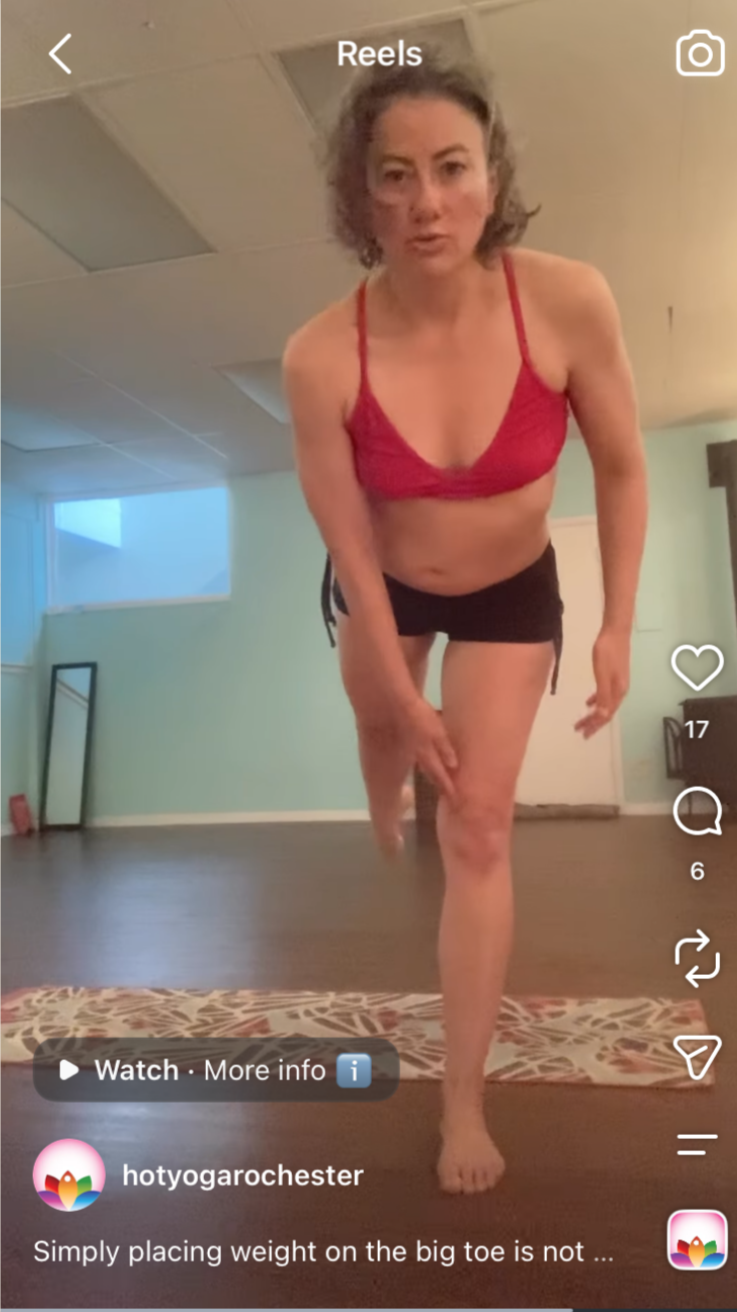
To demonstrate, we will look at Balancing Stick and Toe Stand.
Rather than keeping the weight centered, we are exploring moving the weight forward, backward, and upward. This directly engages the deep front fascial line, which runs from the big toe and instep of the foot, up through the inner knee, thigh, pelvic floor, diaphragm, and into the chest. It also joins with the thumb, fingers, arms, neck, upper back, and diaphragm.
Simply placing weight on the big toe is not enough to translate through the myofascial line, because the weight-bearing load of the front of the body is forward of both the knee and the foot. Waking up this connection requires going straight to the root and foundation of the movement. The foundation of the standing contracted thigh mucle is what allows the chain reaction.
In postures like Balancing Stick and Toe Stand, you can see this in action—particularly when reversing to come out of the posture. The way the big toe and the ball of the foot grip the floor is essential, especially while controlling your reversal maintaining standing thigh contraction.
In Toe Stand, maintaining a strong focus on the big toe and ball of the foot is evident as you push up. Consistent practice of this engagement elevates your alignment and successfully opens and connects your myofascial chain.